Blog
Boost Local Business CTR in 2026
SEO, Organic CTR, Local Businesses
How Local Businesses Can Improve Organic Click-Through Rate in 2026
In a search landscape dominated by AI overviews, zero-click results and paid ads, improving your organic CTR (click-through rate) is one of the most effective ways to turn search visibility into real enquiries, bookings and revenue for your local business.
Why Organic Click-Through Rate Matters More Than Ever
Organic CTR is the percentage of users who click your listing after seeing it in search results. In 2026, studies from sources such as Advanced Web Ranking, Backlinko’s Classic CTR Study and The Digital Bloom: 2026 Traffic Crisis Report all highlight the same reality: impressions are up, but clicks are harder to win. AI overviews, featured snippets and local packs mean that users often get answers without visiting a website at all.
The Digital Bloom report shows zero-click searches reaching 60–69%, with mobile zero-click behaviour as high as 77%. At the same time, ALM Corp’s Paid vs Organic Share 2026 and Seer Interactive’s analysis of AI’s impact on CTR both confirm that organic click share has fallen while paid and AI-driven experiences have grown. For local businesses, this does not mean SEO is dead; it means your search optimisation must focus on earning the click, not just the ranking.
Benchmarking Your Organic CTR: What Is “Good” in 2026?
Industry studies still show that the top three positions capture the lion’s share of clicks, with position one often attracting 30–40% CTR in relatively clean results pages. However, once AI overviews, featured snippets or local packs appear, CTR for traditional listings can drop dramatically. For local service queries (“plumber near me”, “solicitor in Manchester”), the map pack and review snippets tend to pull attention away from standard blue links.
Instead of chasing universal benchmarks, compare your own click-through rate by query and position in Google Search Console. If a page sits in positions 1–3 but has a significantly lower CTR than your site average, it is a strong candidate for optimisation to improve CTR and improve clicks without needing more impressions.
Crafting High-Performing Titles: First Impressions in the SERP
Your title is the single biggest lever you have to influence Organic CTR. Research from sources such as CXL, Advanced Marketing Institute’s Headline Analyzer and CoSchedule Headline Analyzer consistently shows that clear, benefit-led headlines outperform vague or keyword-stuffed ones. For local businesses, effective titles usually combine:
A primary keyword (for search optimisation) – e.g. “Emergency Plumber”
A clear location (for local SEO) – e.g. “in Leeds”
A specific benefit or differentiator – e.g. “Arriving in Under 60 Minutes”
Google may rewrite titles, but guidance from Yoast and Google’s own documentation suggests that concise, descriptive titles still influence what appears. Test variations for your key pages and track the resulting CTR in Search Console. Even a two–three percentage point uplift in CTR on your highest-traffic local service pages can translate into dozens of extra leads each month.
Meta Descriptions That Earn the Click
While Google does not always use your meta description, a well-written one remains a powerful way to improve clicks when it is shown. According to Search Engine Journal, descriptions that summarise the page, echo the user’s intent and include a soft call to action can significantly enhance user engagement and CTR.
Lead with the outcome: “Book a same-day boiler repair in Birmingham with no call-out fee.”
Address objections: mention pricing transparency, reviews, guarantees or availability.
Finish with a subtle CTA: “Call now for a free quote.”
Treat meta descriptions as miniature adverts for your page. Review your key service and location pages quarterly, particularly if impressions are rising but CTR is flat or falling.
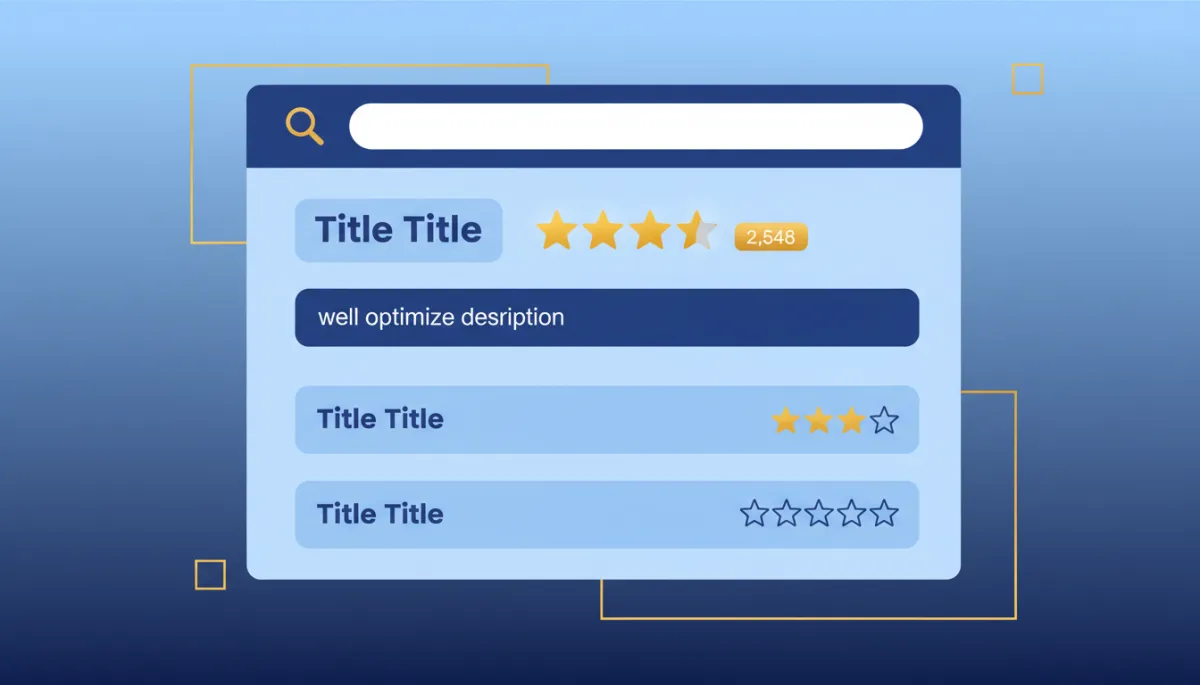
Strong titles, meta descriptions and rich snippets can double CTR for local queries.
Using Structured Data and Rich Results to Stand Out
In crowded results pages, visual enhancements such as review stars, FAQs and pricing can dramatically improve CTR. Implementing structured data, following Google’s Search Gallery guidelines and the Schema.org Article vocabulary, helps search engines understand and enhance your content. For local businesses, LocalBusiness, Organisation, FAQPage and Review schema are especially valuable.
Once implemented, validate your markup with Google’s Rich Results Test. Case studies and industry data show that FAQ schema alone can increase CTR by over 50% for some queries. For additional visibility, explore how-to content and product snippets where relevant to your services. Ahrefs’ guide on finding and winning featured snippets offers practical tactics for occupying these high-CTR positions.
Local SEO: Turning Nearby Searches into Footfall and Enquiries
For bricks-and-mortar businesses, Local SEO is central to any plan to improve organic CTR. Users searching with local intent often see Google Business Profiles, map packs and review snippets before traditional organic listings. To maximise user engagement from these:
Keep your NAP (name, address, phone) consistent across your website and key directories.
Add high-quality photos, service descriptions and opening hours to your Google Business Profile.
Encourage genuine reviews and respond professionally to all feedback to build trust at a glance.
When users see strong ratings, clear photos and accurate information, they are far more likely to click through to your website or call directly from the SERP. This is where digital marketing tips and operational excellence overlap: your online presence must accurately reflect the quality of your offline service.
Aligning Content with Intent to Boost User Engagement
Not all searches are equal. Research shows that branded searches can achieve CTRs of 50–70%, while generic informational queries may perform far lower. To improve CTR, match your content precisely to the intent behind the query:
Informational intent: Create guides and FAQs that answer common questions (“How to choose a family solicitor in Bristol”) and position your brand as the expert.
Commercial intent: Build comparison and pricing pages (“Dental implants cost in Manchester”) that speak directly to buyers ready to take action.
Local transactional intent: Ensure service pages clearly show location, availability and next steps (“Book a free roof inspection in Reading today”).
Once users land on your site, maintain strong user engagement with clear headings, readable layouts and obvious calls to action. Metrics such as time on page and scroll depth will not directly change your rankings overnight, but content that genuinely satisfies visitors is more likely to attract links, brand mentions and repeat visits – all of which support sustainable search optimisation.
Beyond Google: Social Signals and Brand Visibility
As Sprout Social notes, organic reach on social platforms has also declined, but consistent brand visibility still matters. When users recognise your brand name in search results – from local ads, social content, email campaigns or offline marketing – they are more likely to click your listing over an unknown competitor. This is another reason why backlinks and mentions, as highlighted in Backlinko’s CTR research, remain powerful: they build familiarity, which in turn improves Organic CTR.
Turn Insights into Action: Next Steps for Local Businesses
Improving Organic CTR is not a one-off task; it is an ongoing process of testing, measuring and refining. For a practical starting point:
Audit your Search Console data to identify pages with high impressions but low CTR.
Rewrite titles and meta descriptions for those pages using proven headline frameworks and the tools linked above.
Implement or refine structured data, then validate via Google’s Rich Results Test.
Strengthen your Local SEO foundations: Google Business Profile, reviews and consistent citations.
For more detailed breakdowns of SEO strategies, you can explore related resources at https://randservices.co.uk/post/, where you will find additional digital marketing tips tailored to ambitious local businesses.
📌 Key Takeaway: In 2026, winning in search is no longer just about where you rank, but how compelling your listing appears compared with everything else on the page – AI overviews, ads, local packs and competitors included.
Book a Strategy Call with AI Search Visibility Experts
If you would like tailored support to improve Organic CTR, strengthen your SEO strategies and protect your traffic in an AI-first search environment, consider partnering with specialists who work on this every day. Our team helps local businesses interpret their data, prioritise opportunities and implement practical changes that lead to more calls, bookings and sales – not just more impressions.
Ready to turn more searchers into customers? Book a no-obligation strategy call with AI search visibility experts today via https://randservices.co.uk/aisearchvisibility and discover where your biggest CTR and conversion wins are hiding.

Boost Local Business CTR in 2026
SEO, Organic CTR, Local Businesses
How Local Businesses Can Improve Organic Click-Through Rate in 2026
In a search landscape dominated by AI overviews, zero-click results and paid ads, improving your organic CTR (click-through rate) is one of the most effective ways to turn search visibility into real enquiries, bookings and revenue for your local business.
Why Organic Click-Through Rate Matters More Than Ever
Organic CTR is the percentage of users who click your listing after seeing it in search results. In 2026, studies from sources such as Advanced Web Ranking, Backlinko’s Classic CTR Study and The Digital Bloom: 2026 Traffic Crisis Report all highlight the same reality: impressions are up, but clicks are harder to win. AI overviews, featured snippets and local packs mean that users often get answers without visiting a website at all.
The Digital Bloom report shows zero-click searches reaching 60–69%, with mobile zero-click behaviour as high as 77%. At the same time, ALM Corp’s Paid vs Organic Share 2026 and Seer Interactive’s analysis of AI’s impact on CTR both confirm that organic click share has fallen while paid and AI-driven experiences have grown. For local businesses, this does not mean SEO is dead; it means your search optimisation must focus on earning the click, not just the ranking.
Benchmarking Your Organic CTR: What Is “Good” in 2026?
Industry studies still show that the top three positions capture the lion’s share of clicks, with position one often attracting 30–40% CTR in relatively clean results pages. However, once AI overviews, featured snippets or local packs appear, CTR for traditional listings can drop dramatically. For local service queries (“plumber near me”, “solicitor in Manchester”), the map pack and review snippets tend to pull attention away from standard blue links.
Instead of chasing universal benchmarks, compare your own click-through rate by query and position in Google Search Console. If a page sits in positions 1–3 but has a significantly lower CTR than your site average, it is a strong candidate for optimisation to improve CTR and improve clicks without needing more impressions.
Crafting High-Performing Titles: First Impressions in the SERP
Your title is the single biggest lever you have to influence Organic CTR. Research from sources such as CXL, Advanced Marketing Institute’s Headline Analyzer and CoSchedule Headline Analyzer consistently shows that clear, benefit-led headlines outperform vague or keyword-stuffed ones. For local businesses, effective titles usually combine:
A primary keyword (for search optimisation) – e.g. “Emergency Plumber”
A clear location (for local SEO) – e.g. “in Leeds”
A specific benefit or differentiator – e.g. “Arriving in Under 60 Minutes”
Google may rewrite titles, but guidance from Yoast and Google’s own documentation suggests that concise, descriptive titles still influence what appears. Test variations for your key pages and track the resulting CTR in Search Console. Even a two–three percentage point uplift in CTR on your highest-traffic local service pages can translate into dozens of extra leads each month.
Meta Descriptions That Earn the Click
While Google does not always use your meta description, a well-written one remains a powerful way to improve clicks when it is shown. According to Search Engine Journal, descriptions that summarise the page, echo the user’s intent and include a soft call to action can significantly enhance user engagement and CTR.
Lead with the outcome: “Book a same-day boiler repair in Birmingham with no call-out fee.”
Address objections: mention pricing transparency, reviews, guarantees or availability.
Finish with a subtle CTA: “Call now for a free quote.”
Treat meta descriptions as miniature adverts for your page. Review your key service and location pages quarterly, particularly if impressions are rising but CTR is flat or falling.
Strong titles, meta descriptions and rich snippets can double CTR for local queries.
Using Structured Data and Rich Results to Stand Out
In crowded results pages, visual enhancements such as review stars, FAQs and pricing can dramatically improve CTR. Implementing structured data, following Google’s Search Gallery guidelines and the Schema.org Article vocabulary, helps search engines understand and enhance your content. For local businesses, LocalBusiness, Organisation, FAQPage and Review schema are especially valuable.
Once implemented, validate your markup with Google’s Rich Results Test. Case studies and industry data show that FAQ schema alone can increase CTR by over 50% for some queries. For additional visibility, explore how-to content and product snippets where relevant to your services. Ahrefs’ guide on finding and winning featured snippets offers practical tactics for occupying these high-CTR positions.
Local SEO: Turning Nearby Searches into Footfall and Enquiries
For bricks-and-mortar businesses, Local SEO is central to any plan to improve organic CTR. Users searching with local intent often see Google Business Profiles, map packs and review snippets before traditional organic listings. To maximise user engagement from these:
Keep your NAP (name, address, phone) consistent across your website and key directories.
Add high-quality photos, service descriptions and opening hours to your Google Business Profile.
Encourage genuine reviews and respond professionally to all feedback to build trust at a glance.
When users see strong ratings, clear photos and accurate information, they are far more likely to click through to your website or call directly from the SERP. This is where digital marketing tips and operational excellence overlap: your online presence must accurately reflect the quality of your offline service.
Aligning Content with Intent to Boost User Engagement
Not all searches are equal. Research shows that branded searches can achieve CTRs of 50–70%, while generic informational queries may perform far lower. To improve CTR, match your content precisely to the intent behind the query:
Informational intent: Create guides and FAQs that answer common questions (“How to choose a family solicitor in Bristol”) and position your brand as the expert.
Commercial intent: Build comparison and pricing pages (“Dental implants cost in Manchester”) that speak directly to buyers ready to take action.
Local transactional intent: Ensure service pages clearly show location, availability and next steps (“Book a free roof inspection in Reading today”).
Once users land on your site, maintain strong user engagement with clear headings, readable layouts and obvious calls to action. Metrics such as time on page and scroll depth will not directly change your rankings overnight, but content that genuinely satisfies visitors is more likely to attract links, brand mentions and repeat visits – all of which support sustainable search optimisation.
Beyond Google: Social Signals and Brand Visibility
As Sprout Social notes, organic reach on social platforms has also declined, but consistent brand visibility still matters. When users recognise your brand name in search results – from local ads, social content, email campaigns or offline marketing – they are more likely to click your listing over an unknown competitor. This is another reason why backlinks and mentions, as highlighted in Backlinko’s CTR research, remain powerful: they build familiarity, which in turn improves Organic CTR.
Turn Insights into Action: Next Steps for Local Businesses
Improving Organic CTR is not a one-off task; it is an ongoing process of testing, measuring and refining. For a practical starting point:
Audit your Search Console data to identify pages with high impressions but low CTR.
Rewrite titles and meta descriptions for those pages using proven headline frameworks and the tools linked above.
Implement or refine structured data, then validate via Google’s Rich Results Test.
Strengthen your Local SEO foundations: Google Business Profile, reviews and consistent citations.
For more detailed breakdowns of SEO strategies, you can explore related resources at https://randservices.co.uk/post/, where you will find additional digital marketing tips tailored to ambitious local businesses.
📌 Key Takeaway: In 2026, winning in search is no longer just about where you rank, but how compelling your listing appears compared with everything else on the page – AI overviews, ads, local packs and competitors included.
Book a Strategy Call with AI Search Visibility Experts
If you would like tailored support to improve Organic CTR, strengthen your SEO strategies and protect your traffic in an AI-first search environment, consider partnering with specialists who work on this every day. Our team helps local businesses interpret their data, prioritise opportunities and implement practical changes that lead to more calls, bookings and sales – not just more impressions.
Ready to turn more searchers into customers? Book a no-obligation strategy call with AI search visibility experts today via https://randservices.co.uk/aisearchvisibility and discover where your biggest CTR and conversion wins are hiding.
Start growing with RandLeads today!
Copyright Rand Web Services 2022 -- All Rights Reserved
We’re on a mission to build a better future where technology creates good jobs for everyone.